
As the global amusement industry continues to expand, pendulum rides, offering thrilling experiences, have become a popular draw for tourists. However, safety concerns also arise. The pendulum fracture incident in Saudi Arabia has sounded a wake-up call for the industry. Faced with high-intensity operation and complex stress environments, equipment design and material selection are particularly critical.
Accident Background and Industry Warning of Saudi Pendulum Accident
On July 30, 2025, a serious amusement ride accident occurred at an amusement park in Taif, Saudi Arabia. A 25-seat 360° pendulum suddenly broke during operation and sent the cabin and passengers plummeting, injuring more than 20 people. This accident not only shocked the local community but also garnered widespread attention within the global amusement ride industry.
Pendulum rides, a common large-scale amusement ride in amusement parks, are popular with visitors for their thrilling spinning and flipping movements. However, these rides are complex in structure and operate in harsh conditions, placing extremely high demands on both design strength and routine maintenance. This accident serves as a reminder to the industry: safety is always the lifeline of amusement rides.
Preliminary Analysis of the Accident
A pendulum ride relies on a main shaft to drive the boom for rotation. The boom not only bears the tensile forces from the cabin and passengers, but also resists periodic bending moments. Therefore, the design and maintenance of the boom is of utmost importance for the ride. Combining on-site video footage and accident information, the preliminary analysis of the accident is as follows:
01 Fracture Location
Based on the accident scene, the boom fractured near the main shaft at the cabin end. This location is precisely where bending moments are most concentrated, making it highly susceptible to fatigue damage from long-term load accumulation.
02 Cause of Fracture
Preliminary assessment indicates that the fracture was primarily caused by the significant bending moment experienced by the boom while driving the cabin. If the design does not adequately consider transient impact loads and long-term fatigue, cracks may gradually form on the boom during operation and eventually break.
Root Causes of the Accident: Design & Management Flaws
The root causes of the accident are the following two aspects:
Design Flaws
The boom, the core of the equipment's operation, can easily accumulate fatigue and eventually break during long-term operation if its loads and instantaneous bending moments are underestimated during the design phase, resulting in insufficient strength reserves.
Management Flaws
Low-priced, low-quality, and second-hand refurbished fairground rides are circulated in some markets, making quality unreliable. Furthermore, inadequate routine maintenance and oversight can allow potential risks to remain unnoticed, posing a threat to visitor safety.
Beston Rides Ensures Amusement Safety with Strength and Redundancy
As a professional amusement equipment manufacturer with over 20 years of experience in the industry, Beston Rides has launched a new 360° foundation-free pendulum rides based on the operating characteristics of pendulum rides. Through scientific design and rigorous material selection, the boom strength and structural safety are taken to a new level.
High-Specification Materials to Eliminate Fatigue Cracks
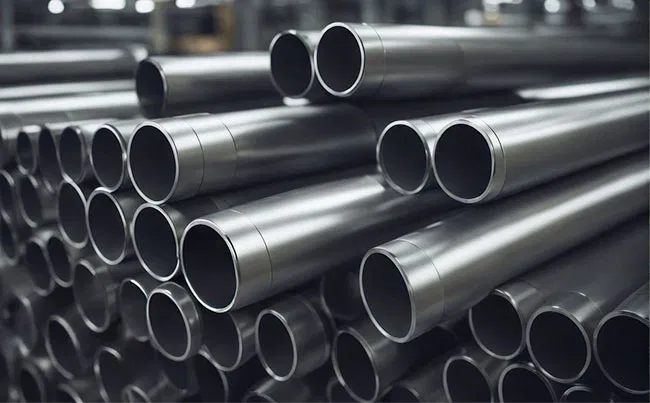
- Boom Main Material: 12mm thick, 426mm outer diameter seamless steel pipe, seamlessly welded throughout to prevent stress concentration and cracking at welds.
- Main Rotating Axis: 12mm thick, 610mm outer diameter seamless steel pipe, considering both strength and toughness to ensure long-term stable operation of key load-bearing areas.
Ultra-High Safety Factor to Test for Extreme Operating Conditions
Space Turbo 360° foundation-free pendulum ride has been tested under extreme operating conditions and remains highly stable:
- Load Design: Calculated based on a single-seat load of 100kg, significantly exceeding the internationally accepted 75kg.
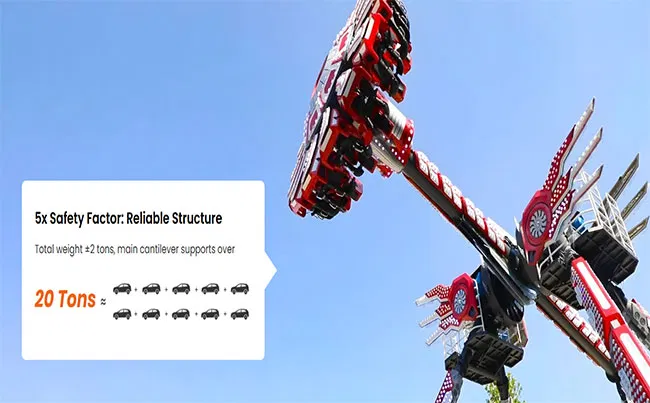
- Overall Safety Factor: Even when fully loaded with 16 passengers, the boom's safety factor remains greater than 5.
- Reinforcement Rib Coverage: The passenger-side main reinforcement ribs provide up to 50% coverage, effectively enhancing the boom’s bending resistance.
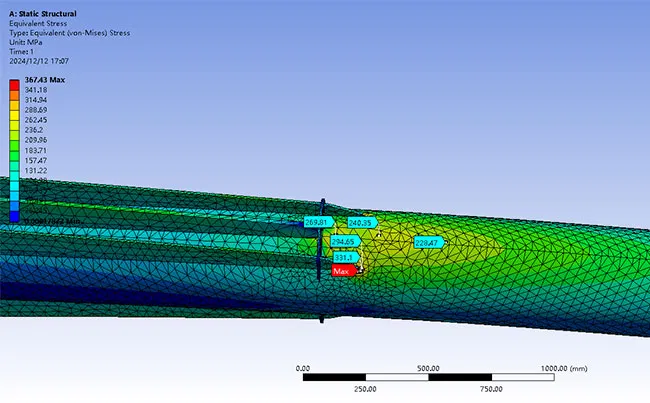
Scientific Simulation by Finite Element Analysis
The platform surface and steps use 1.5mm thick aluminum tread plates for anti-slip functionality. Additionally, the surface of the steps is covered with a very eco-friendly and healthy rubber mat, which is non-slip, impact-resistant, insulating, and anti-static.
Strict Manufacturing Process for Safety at Every Step
- Full Raw Material Traceability: Complete records are maintained from steel warehousing to component processing.
- Process Quality Inspection: Including ultrasonic testing, dimensional inspection, and weld inspection to ensure that no defective parts enter assembly.
- Eliminating Shoddy Work: Strictly adhere to national quality inspection and management systems to ensure that every inch of steel is used appropriately.
4 Layers of Protection to Ensure Visitor Safe Riding Experience
Beston Rides not only ensures structural satability but also incorporates four safety features to ensure a thrilling yet safe experience:

Chest & Abdomen-type Safety Bar
The first physical restraint, designed to fit the human body.
Secondary Seat Belt
Provides secondary security for the bar.
Double Ratchet Bar Locking System
Prevents accidental loosening of the bar during operation.
4-point Safety Harness
Multiple shoulder and waist points provide comprehensive protection.
Inevitable Trend of Amusement Ride Safety Standardization
With the continuous expansion of the global amusement market, the scale and complexity of large thrill rides are increasing, and safety issues are gradually becoming apparent. Standardization is becoming an inevitable requirement for the development of the industry.

International Trends
Mature markets such as Europe and the United States have long-established relatively comprehensive amusement ride safety standards, such as Europe’s EN13814 and the United States’ ASTM F24. These standards cover the entire life cycle, including materials, design, manufacturing, installation, operation, testing, and decommissioning.
China’s Progress
In recent years, China's standards, such as Safety Specifications for Large Amusement Facilities and Safety Technical Specifications for Special Equipment, have been continuously improved and gradually aligned with international standards. However, there is still room for improvement in enforcement and widespread adoption.
Future Direction
With technological advancements, safety standards will not only be limited to materials and structures, but will also expand to include intelligent monitoring, data-driven management, and full lifecycle traceability, achieving a shift from post-event detection to real-time prevention.
Optimization Plan for Safety Development of Amusement Rides
The Saudi pendulum ride accident has prompted a profound rethink for the entire industry:
Ensuring Adequate Design Safety Margins
Strengthening Market Regulation & Elimination Mechanisms
Keeping Essential Daily maintenance
Strengthening Corporate Responsibility
Beston Rides’ Industry Responsibility: Adhere to Safety and Security
Amusement rides not only brings excitement and joy, but also carries the lives and safety of thousands of tourists. Behind every accident lies a profound lesson. Making safety the foundation of the industry is the original intention that all practitioners must adhere to.
Space Turbo 360° Pendulum Ride was born with this in mind. It’s more than just an amusement ride; it represents Beston Rides’ commitment to the industry and its visitors. Through comprehensive design, materials, production, and safety measures, we strive to set a benchmark for safety and reliability in the industry. Beston Rides look forward to cooperating with you!